

Understand the system by operating within it.
FlowState is a strategy simulation in which you manage three connected AI data centers working toward a shared computing target. Water and shared resources are limited, conditions change, and decisions made in one part of the system can create consequences elsewhere and over time.
The rules are deliberately simple. The challenge comes from understanding how they interact.
LEARNING THROUGH THE SYSTEM
In FlowState, three data centers must meet a shared computing target while operating with limited water and shared resources.
You choose how each center should operate, when resources need to be protected or recovered, and how water should move through the network. Increasing performance can help you now but leave fewer options later. Supporting one part of the system can place pressure on another.
There is rarely one obviously correct decision. You have to observe what is happening, understand why, and adapt as the situation changes.
OBSERVE. DECIDE. UNDERSTAND. ADAPT.
WHAT BECOMES VISIBLE
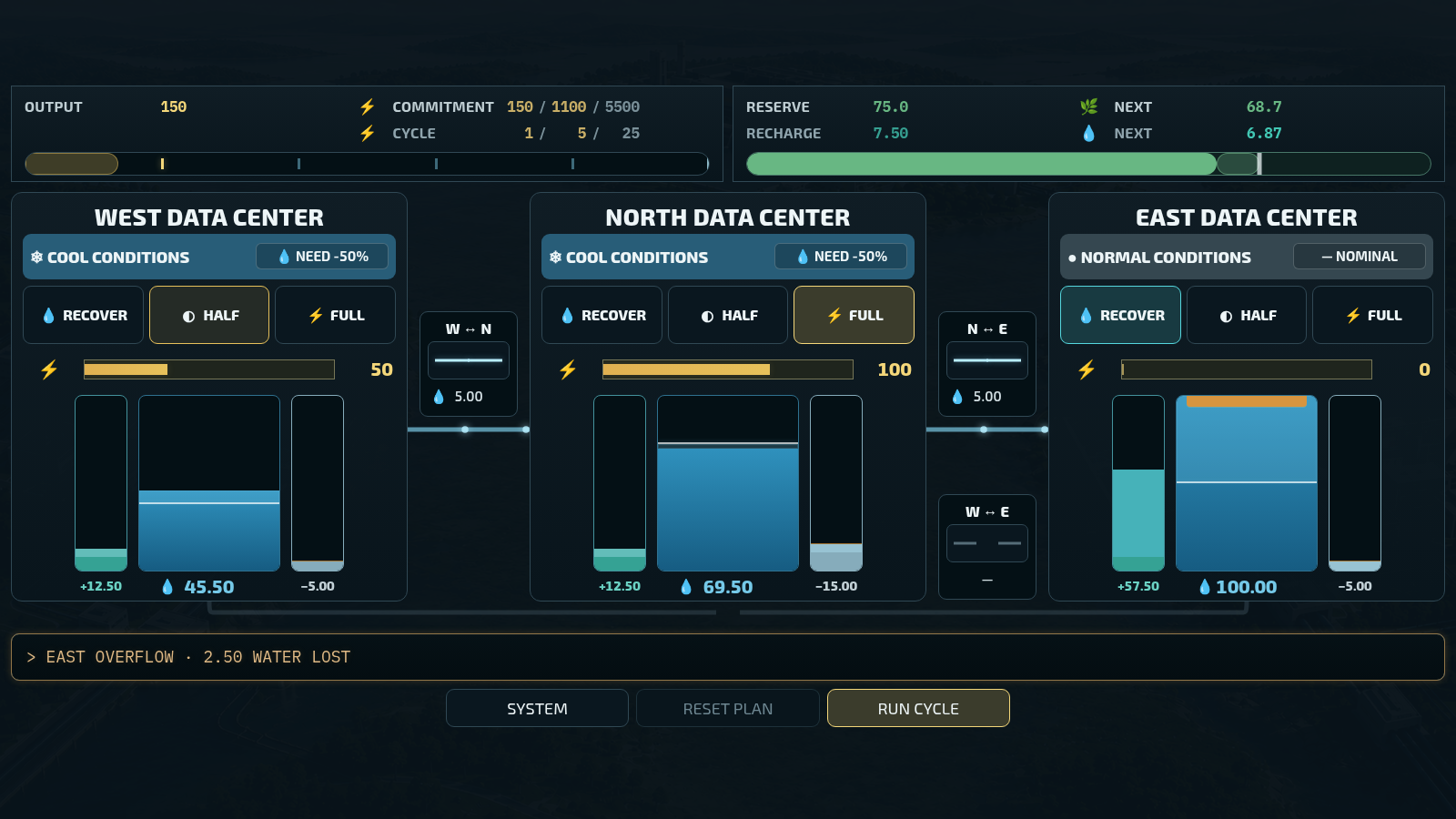
FlowState turns relationships that are often difficult to see into something you can observe through decisions and their consequences:
- limited resources and competing priorities
- how changes in one part affect another
- feedback and delayed consequences
- bottlenecks and trade-offs
- uncertainty and changing conditions
- how local choices shape the whole system
- how today’s decisions change what remains possible later
The aim is not simply to find the right move. It is to develop a better understanding of why the system behaves as it does — and use that understanding to make better decisions.
DECISIONS UNDER CHANGING CONDITIONS
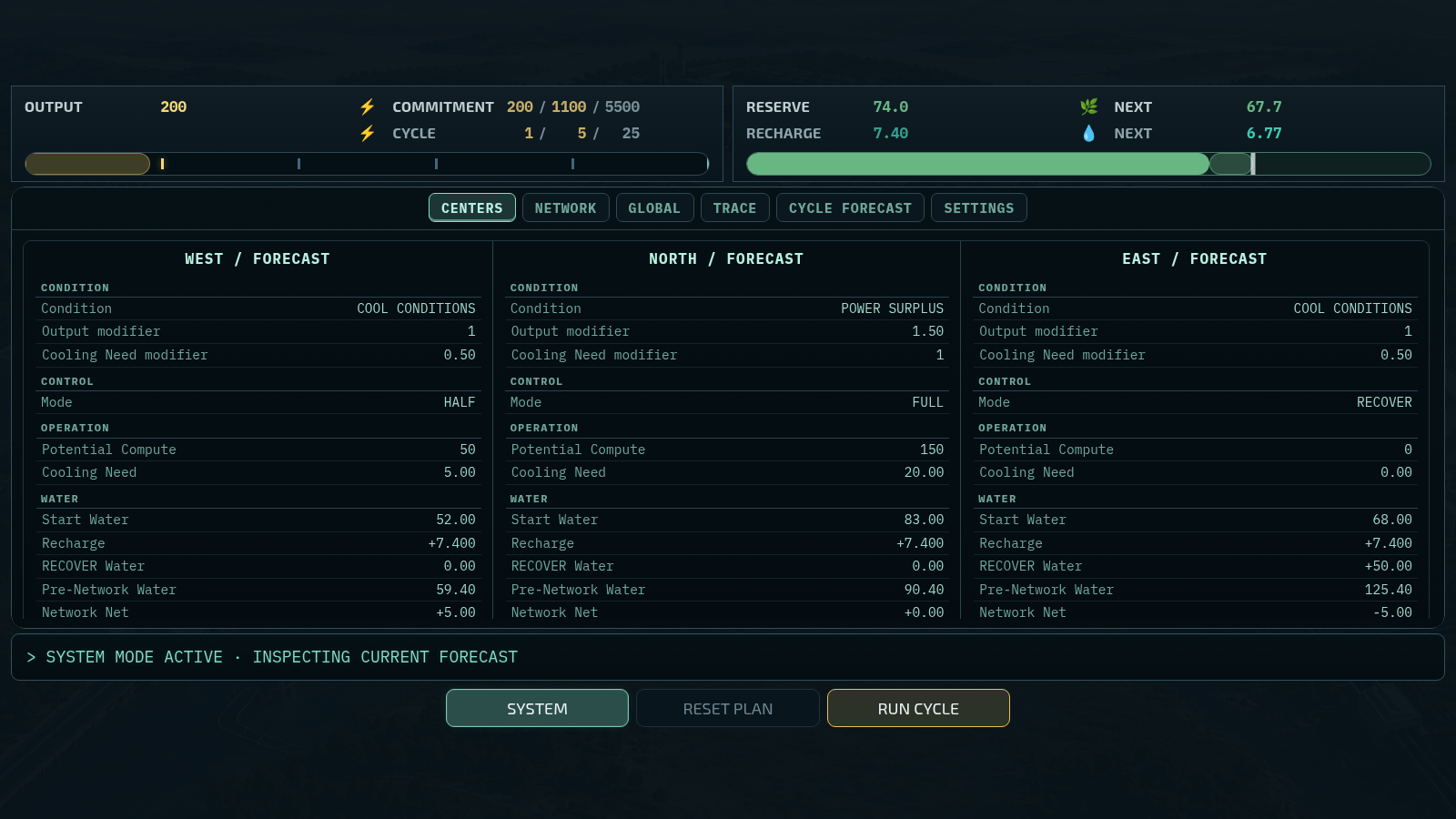
A plan that works now may not work a few cycles later.
Resources are consumed and replenished. Conditions change. Parts of the system depend on one another. Actions taken to solve an immediate problem can create new constraints elsewhere or reduce your ability to respond later.
FlowState makes these relationships visible without making them predictable in advance. Players have to form an understanding of the system, test it through action, and revise their approach when the evidence changes.
That process — observe, understand, decide, adapt — is relevant far beyond the simulation.
DESIGNED FOR REFLECTION
FlowState uses the structure of a strategy game to make systems thinking practical.
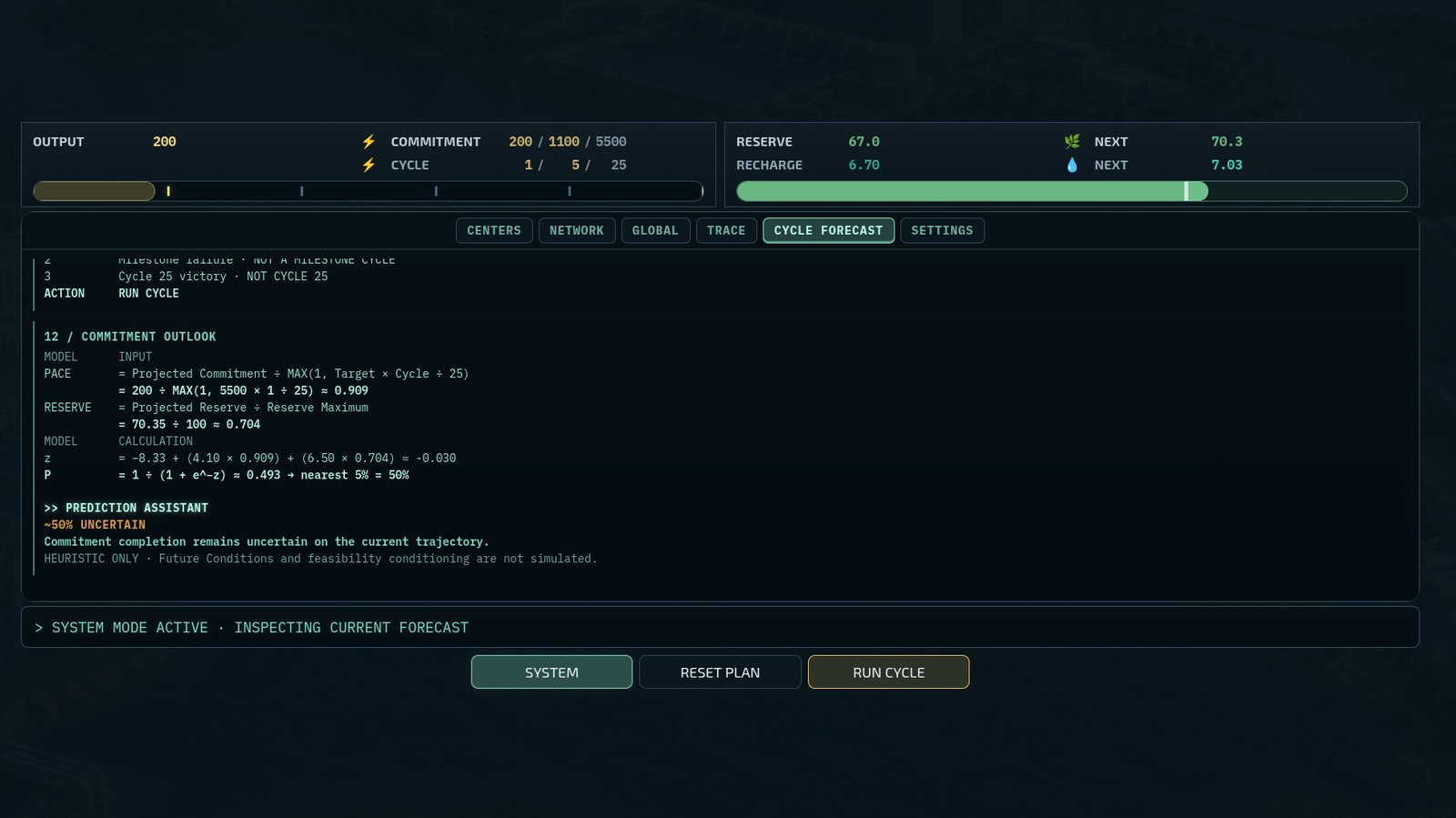
Players encounter feedback, constraints, delays, trade-offs and interdependence through experience before those ideas need to be explained as theory. Supporting materials and guided reflection can then connect what happened in the simulation to patterns found in other systems.
This makes FlowState suitable both for independent play and for facilitated learning. In workshops, vocational education, secondary education and higher education, a group can work with the same system, compare decisions and discuss why different approaches produced different outcomes.
The objective is not to memorize terminology. It is to become better at recognizing relationships, questioning assumptions, anticipating consequences and adapting decisions as circumstances change.
FACILITATION & INSTITUTIONAL USE →
FROM MODEL TO EXPERIENCE
FlowState grew from a long-standing interest in systems thinking, learning design, and a practical question:
How do you keep a system working when resources are limited, priorities compete, parts interact, and conditions keep changing?
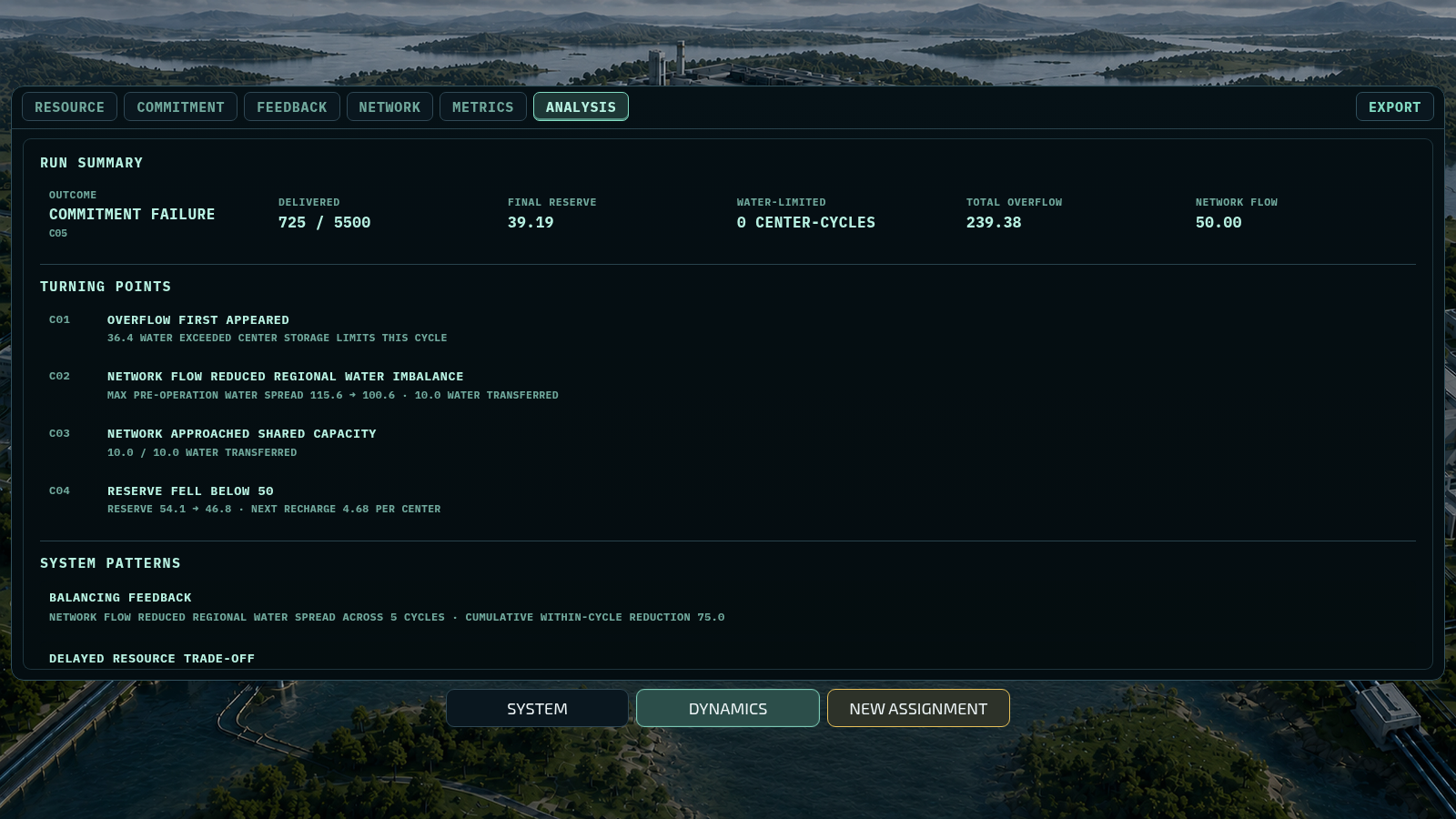
The simulation creates a system small enough to understand, but complex enough for trade-offs, feedback, uncertainty and consequences to matter. By making decisions, observing what happens and adapting as conditions change, players learn how the system behaves — and how better understanding can lead to better decisions.